Comparative Analysis Training Session
Day 2, April 16th
Chaired and led by Prof. dr. Andrej MISSON
Academy of Music of the University of Ljubljana
Professor for music theory and composition
Score to use
Audio
Analysis Booklet HarMA 2025
The overall objective of this traing session (Day2, 16/04) is to compare various methodological
and didactic approaches to music analysis. To do this, we select a short piece in order to collect
analysis made by the participants.
In order to facilitate discussion at the session, we ask that participants submit their own
analysis of the piece in advance (due date: 14 March). You are free to use any methodology
and terminology you see fit to approach the music, especially as you may use them in various
pedagogical settings (whether for a general music analysis course, for more advanced
analysis seminars, or for specific target groups or other music-educational settings). The
analysis can take the form of an annotated score, diagrams, and/or a short accompanying text.
You may elect to discuss structural and stylistic elements; aspects of performance; the
listening experience; or any other analytical modality you deem appropriate. You may choose
to provide an analysis of the entire movement, or you can decide to focus your attention on
specific passages for more detailed assessment. Most importantly, we are looking for your
analytical and didactic insights into the music, ones that will foster friendly debate and
collegial discussion among the HarMA participants. More detailed questions about the piece
will follow at a later date.
Anton Lajovic, Lan (Flax)
Anton Lajovic (1878–1960) was a Slovenian composer and judge. He received his musical education in Ljubljana and Vienna, where his composition professor Robert Fuchs (1847–1927) was his teacher. Composers Stanko Premrl, Hugo Wolf and Gustav Mahler, among others, studied with him. Lajovic’s oeuvre includes self-songs, choirs and orchestral works.
The composition Lan (Flax) is one of the most popular and famous Slovenian choral compositions. It is written to a text by the Croatian poet Dragutin Milivoj Domjanić (1875–1933), who was also a judge. The song is written in the Kajkavian dialect, a version of the Croatian language that is also close to Slovenian. In 1917, it was published in the collection Kipci i popevke.
The lyrics are lyrical and amorous. The blossoming flax reminds the poet of his loved one and evokes in him thoughts of the longing and transience of life and love. The composition Lan (Flax) was published in the collection Dvanajst pesmi za moški, mešani in ženski zbor (Twelve Songs for Men, Mixed and Female Choir), published in 1920 by the Glasbena Matica.
https://www.dlib.si/stream/URN:NBN:SI:IMG-LV2HU2EW/0827c7a5-b2a9-460f-857e-4312f4cb520f/PDF
The composer paid special attention to the expression of emotions. The composition is through-composed, and all nine two-line stanzas are set to music in their entirety. Musical means are used to follow the content of the text template. The focus of the analysis should be on the harmony formed in the late Romantic style with some elements of impressionism. Such a stylistic design undoubtedly allows for many views on the harmonic flow. You can design the analysis as you wish and include all musical elements in it. You can also prepare the harmonic analysis in any way, using any methodology and terminology. You can analyse individual sections or the composition as a whole.
There are several relevant tracks available on YouTube: Audio
All the submitted Analysis will be collected in one digital booklet to share to the audience.
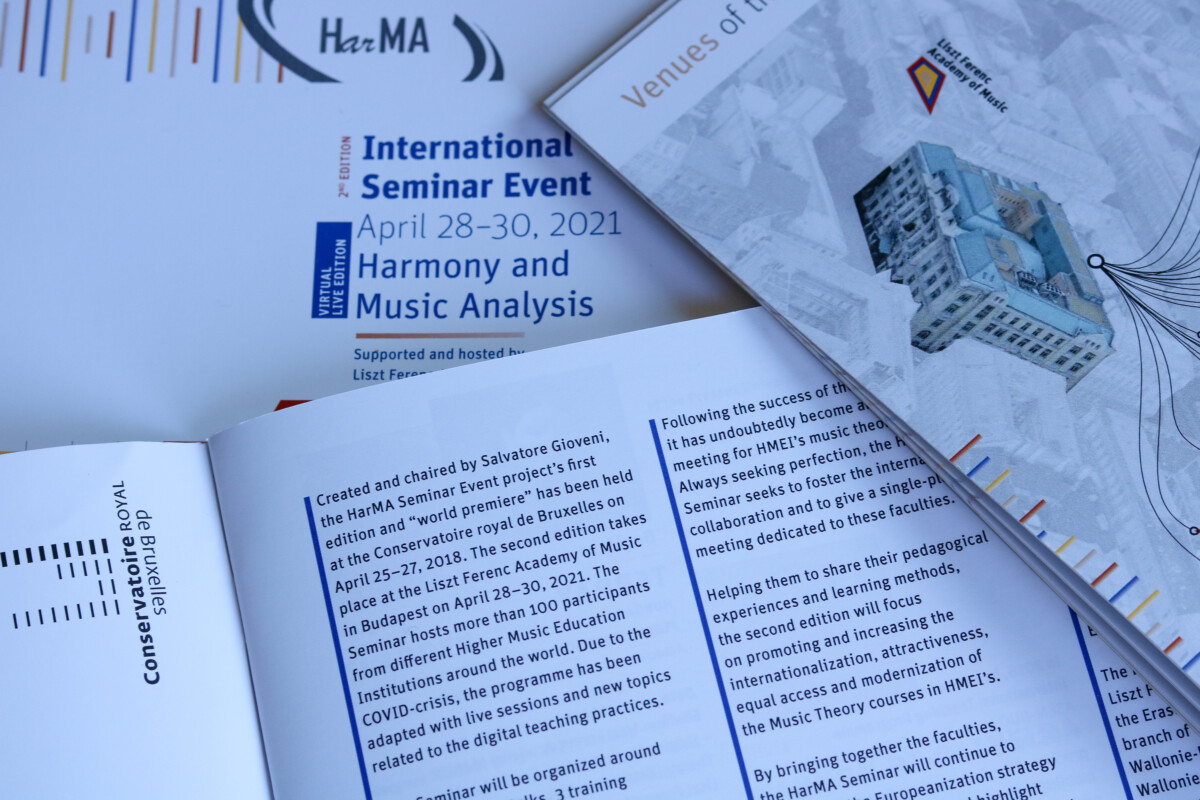
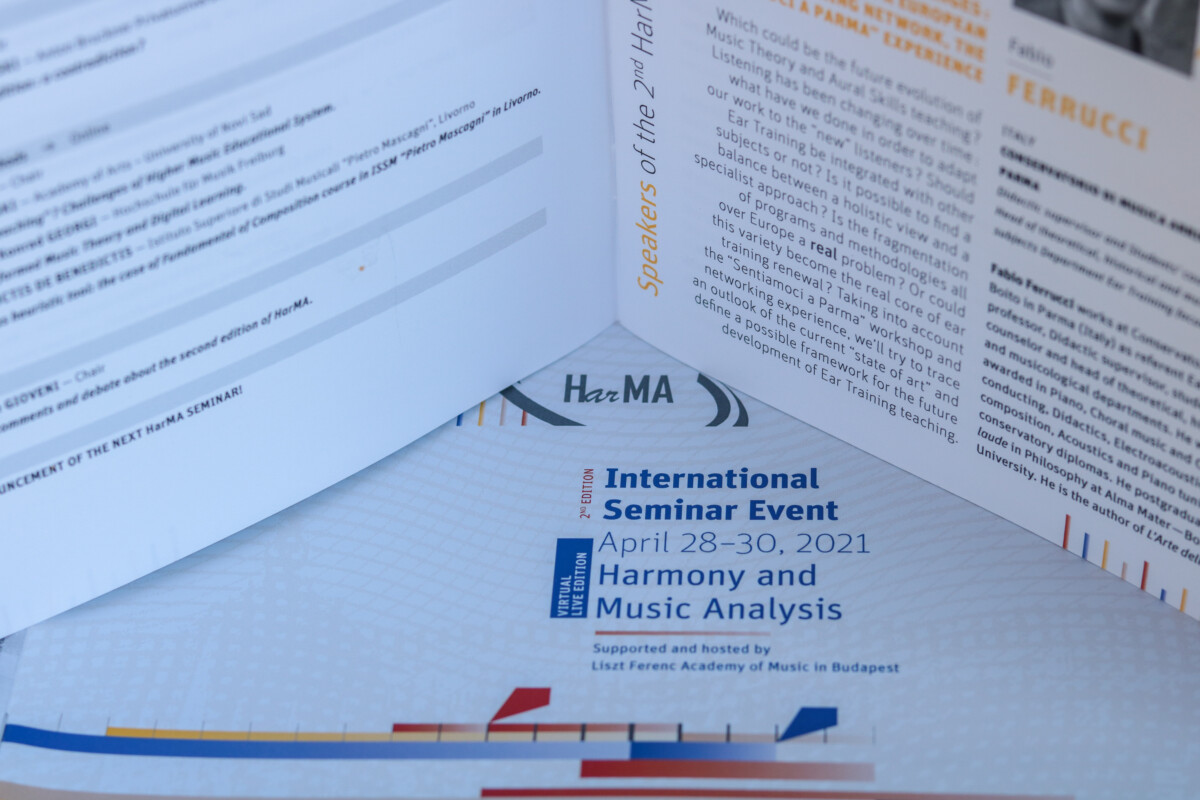
Booklet of HarMA 2018
Booklet of HarMA 2023
Analysis Booklet HarMA 2025
This Analysis Booklet HarMA 2025 represents the work of twenty music theory and analysis teachers
coming from no fewer than thirteen different countries. Their analyses of Isaac Albéniz’s famous prelude
from book one of his piano suite Iberia (“Evocación”) demonstrate the plurality of methodologies and traditions
that can be brought to bear upon a work that is rich in its evocations of Spanish folk idioms, classical
structures and procedures, and exotic scales and harmonies.
We would like to thank the participants for their contributions, and we look forward to a rich
comparative analysis session at the HarMA Seminar in April!
If you have any queries about the conference, please email
erasmus@conservatoire.be (Salvatore Gioveni, Chair of the HarMA projects)
All Participants will also be invited to publish their analysis in the HarMAnalysis Repository
if the HarMA HUB platform is ready, which is a part of the HarMA HUB project. All analysis
will be submitted to the standard review process. Please see the website
for the guidelines and requirements.